Ask a group of kids what they want to be, and someone will always say “astronaut”. It’s one of those dreams that combines everything children love: rockets, adventure, science and being brave. But what does it actually take to become an astronaut – and how can kids get a taste of it today?
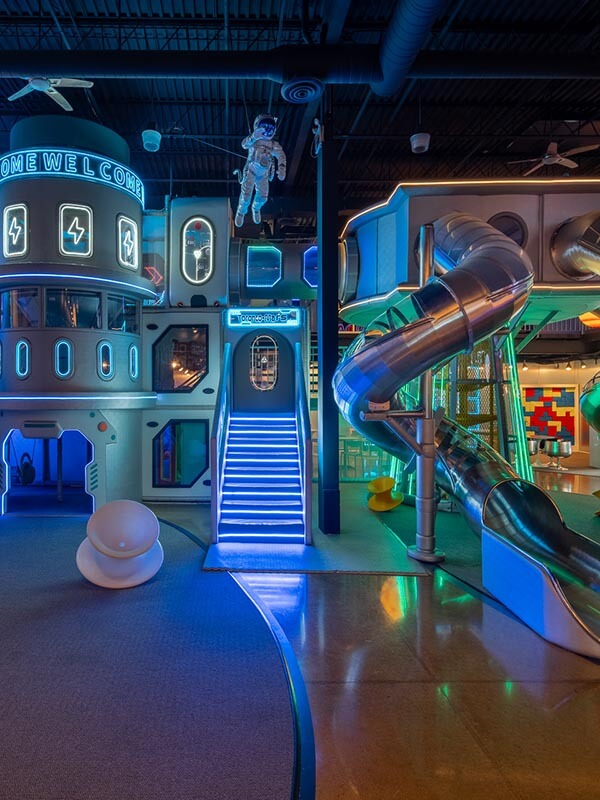
How real astronauts train
Astronauts spend years preparing for a mission. Their training is not just about science – it’s about the whole body and mind:
- Physical fitness. In space, muscles and bones weaken without gravity, so astronauts train strength and endurance every day.
- Balance and orientation. Spinning, floating and changing direction can confuse the inner ear. Astronauts practise staying calm and oriented when everything moves.
- Problem-solving. When something breaks on a spacecraft, there is no repair shop. Crews learn to think step by step and fix problems together.
- Simulation. Before a real launch, astronauts rehearse flights, landings and emergencies in simulators again and again.
- Teamwork. Every mission depends on clear communication and trust between crew members.
Canada has its own astronaut heroes too – like Jeremy Hansen, part of NASA’s Artemis II crew around the Moon. Stories like his remind kids that space is not just in movies.
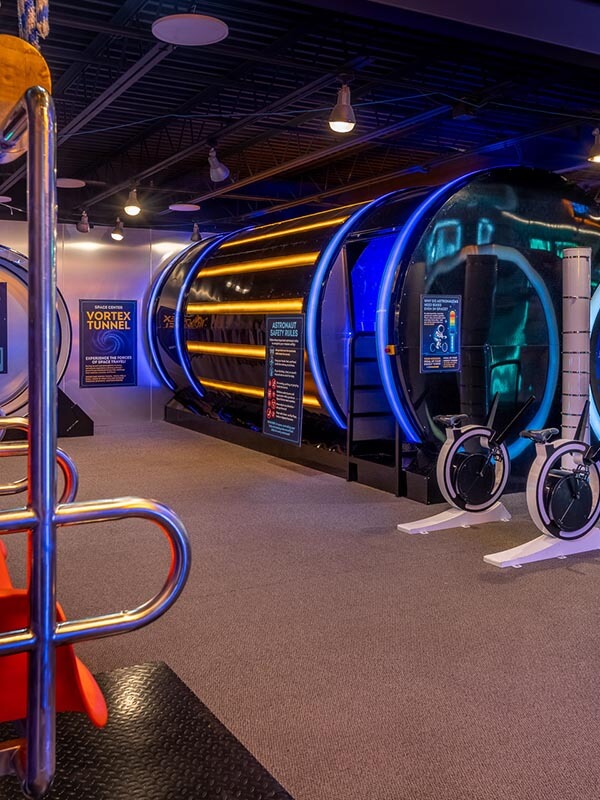
Inspired by real astronaut training. Designed for kids.
At Space Center Vaughan, we took the same ideas and turned them into a mission for kids 5-11. Every young astronaut gets a Mission List and moves from station to station:
- Spaceport – the mission starts next to a rocket preparing for launch to Mars.
- Physical Training – climbing and strength challenges, just like astronauts keep their bodies ready for space.
- Stability Room – balance and coordination challenges that test how well kids stay steady when the world moves.
- Science Lab – hands-on experiments with gravity, forces, air pressure and more.
- Flight Simulation – a VR flight in a Mars rover, an escape capsule or a parachute landing (kids 6+, VR upgrade).
- Zone 51 – creative alien science for curious minds.
At the end comes the Final Astronaut Test – the moment kids prove they’re ready for launch.
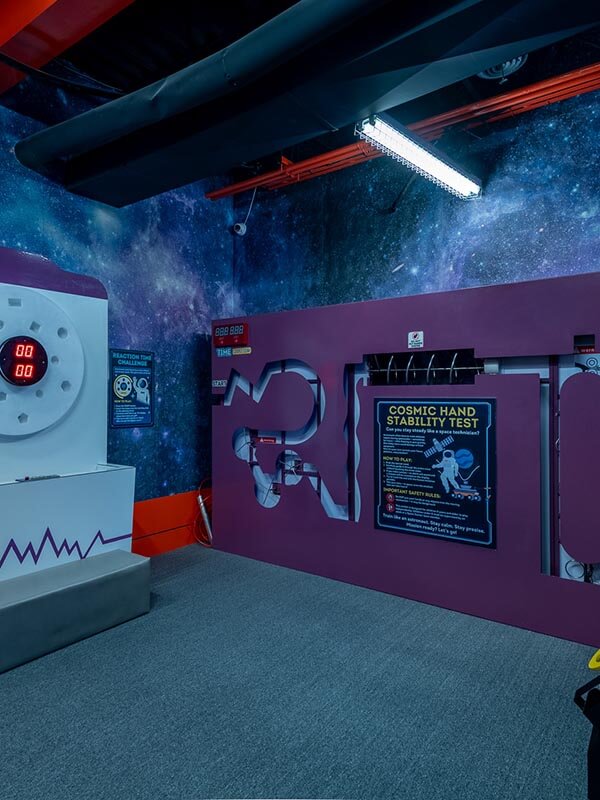
Why this kind of play matters
Astronaut training is a perfect mix of movement and thinking. Kids climb and balance, then stop to solve a challenge or watch a live science show. Switching between active and focused play helps children stay engaged longer – and they learn about gravity, forces and flight by feeling them, not just reading about them. Off the screens. Into the mission.
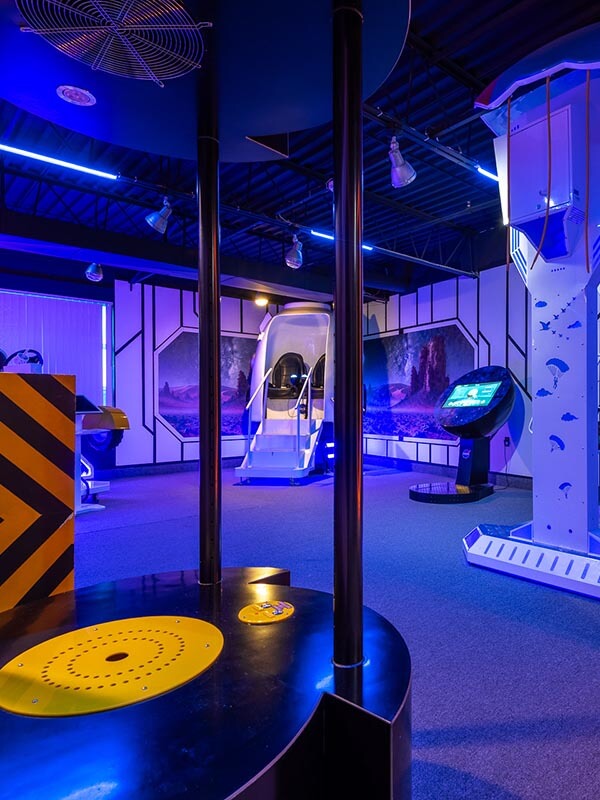
Try it at home first
Want to warm up before your visit? Try a mini “astronaut test” in the living room: stand on one foot with eyes closed for 10 seconds, walk a straight line of tape heel-to-toe, and build a paper rocket together (see our rainy day space crafts post). Then ask your child: which part would be hardest in space?
Ready for your mission?
Space Center is at 688 Chrislea Rd, Vaughan, with free parking behind the building. General Admission includes up to 3 hours, kids under 5 enter free, and parents are welcome to join the mission.